In early 2026, the launch of OpenAI Frontier shifted the enterprise landscape. It moved AI from a "chat box" in a sidebar to what many are calling the Semantic Operating System (SOS) of the modern company.
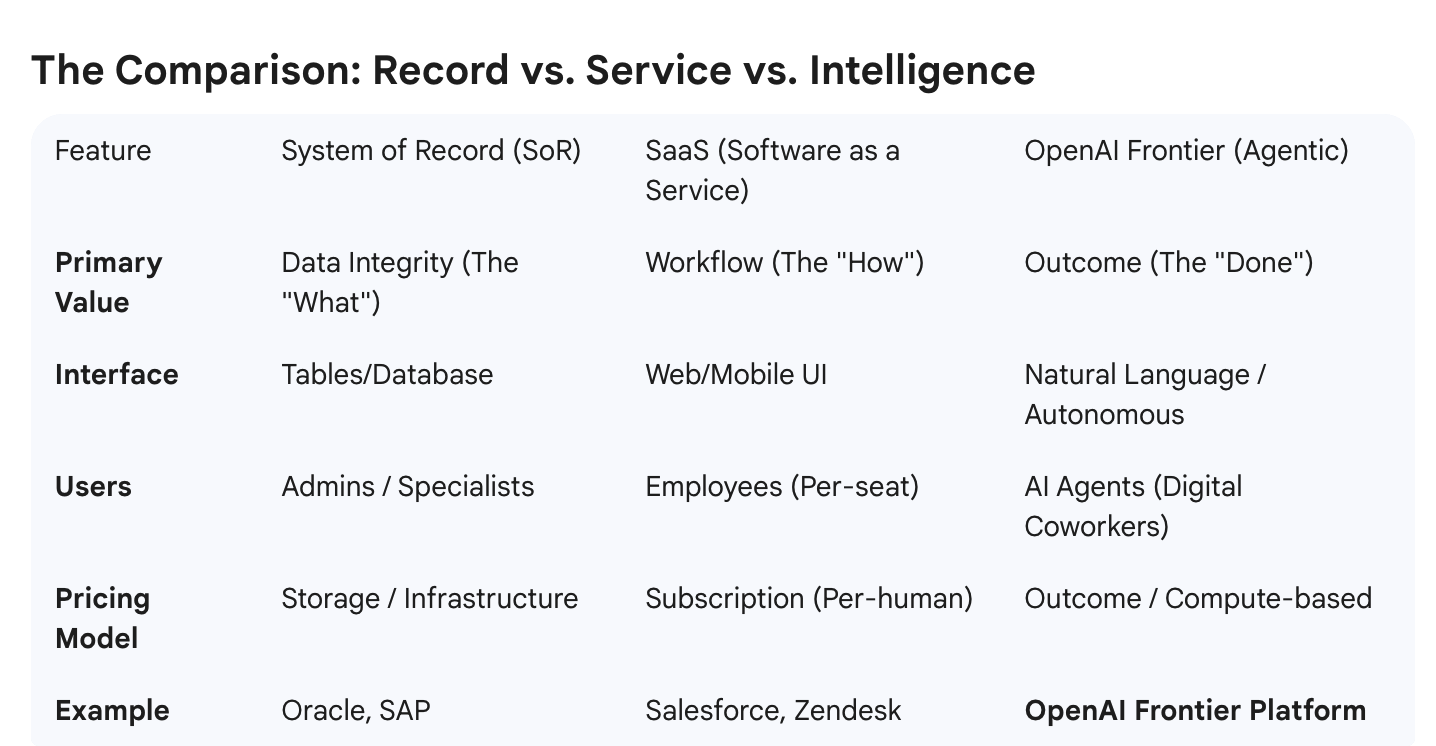
To understand why this matters, you have to look at the three-way collision between Frontier Models, Systems of Record (SoR), and SaaS.
A System of Record (like Salesforce, Workday, or SAP) is the source of truth. Its job is to be a reliable, structured database.
Software as a Service (SaaS) was the 2010s' answer to productivity. It took the System of Record and wrapped it in a user interface (UI) with specific workflows.
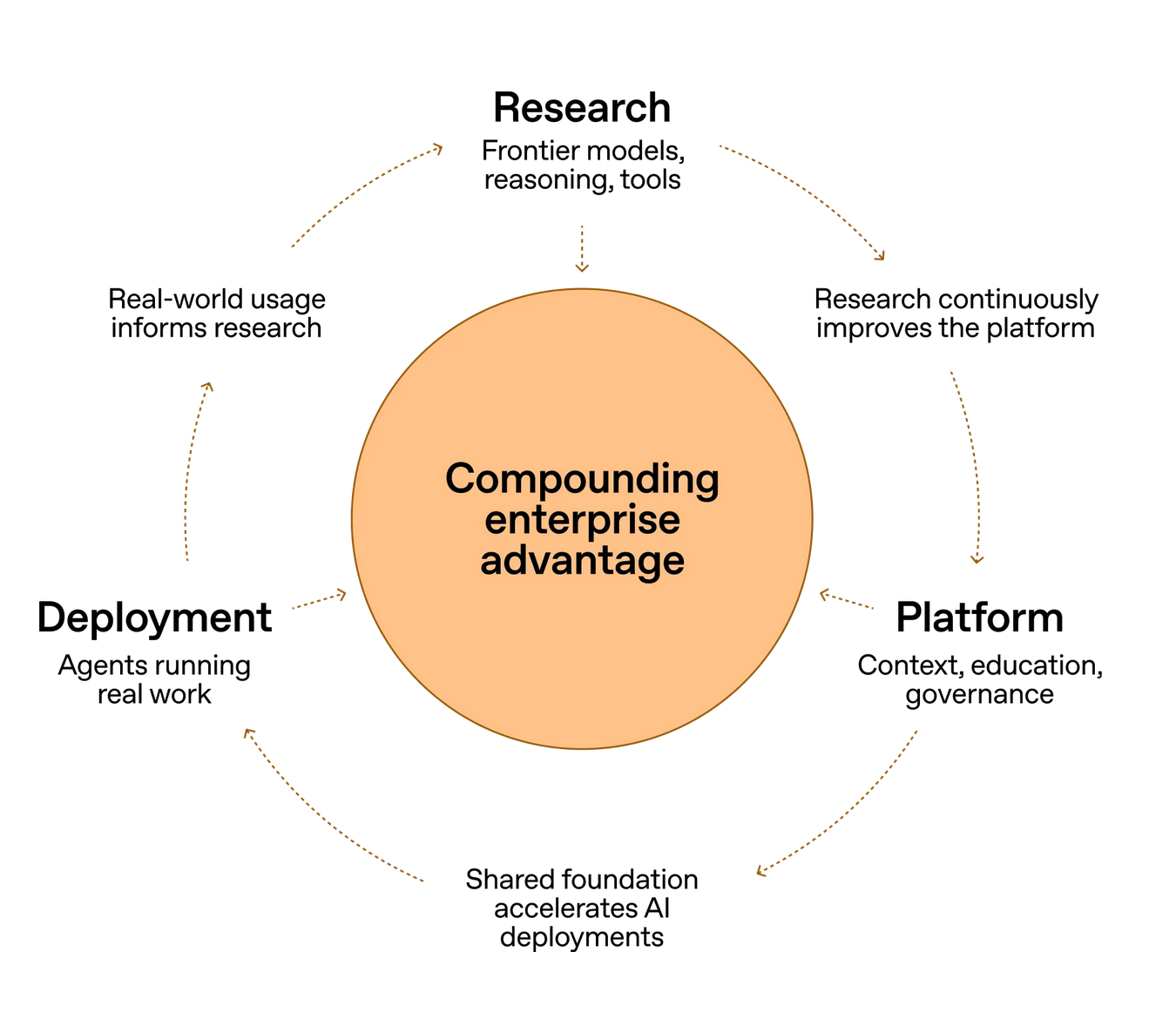
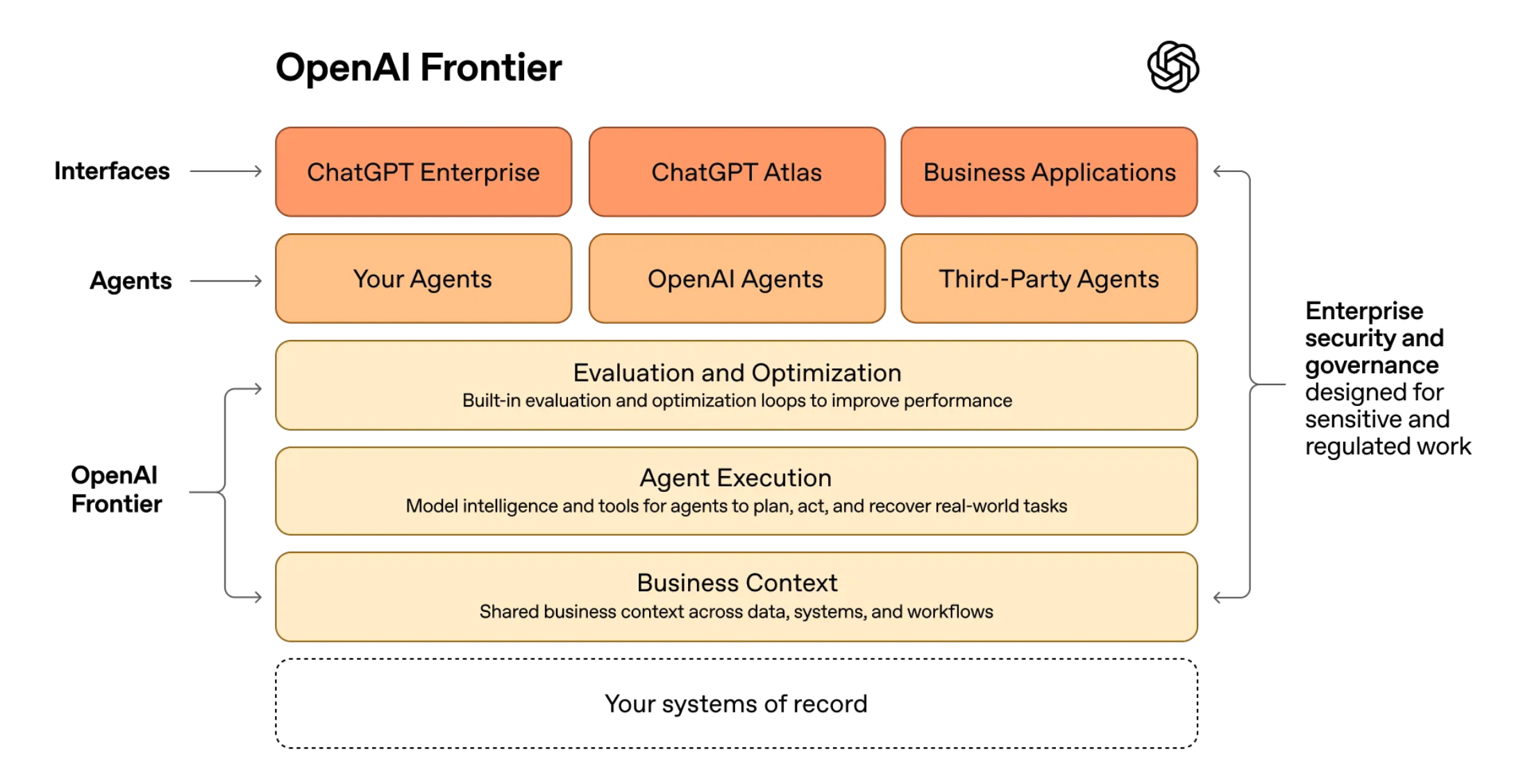
OpenAI Frontier isn't just a smarter version of ChatGPT; it is an orchestration layer that sits above your SaaS tools and inside your Systems of Record.
Unlike a standard LLM, Frontier is designed for Action and Memory. It uses a "Shared Business Context" to understand your company's unique jargon, hierarchy, and goals.